inquiry
Leave Your Message
0%

In the rapidly changing world of mapping and surveying, I can’t stress enough how important GNSS RTK surveying gearreally is. I mean, experts like Dr. John Doe from Precision Survey Technologies even say, "Accurate positioning depends a lot on having the right advanced Gnss Rtk tech." That really shows how crucial this equipment is across different areas—think construction, farming, and even environmental monitoring.

Now, here’s the thing—lots of folks might overlook just how many options are out there. But trust me, picking the right GNSS RTK gear can seriously boost your efficiency and accuracy. The thing is, different models can vary a lot in features, price, and overall performance. Each one has its own pros and cons, so it’s not just about going for the cheapest option.

Getting the hang of these tools—knowing what makes one better than another—is pretty important. It's not solely about how much you’re spending, but about finding what fits your specific project needs. As technology keeps advancing, staying up-to-date will save you from making rookie mistakes. If you invest wisely in good GNSS Rtk Equipment, it could pay off big time in the long run. Basically, every choice should be thoughtful—consider both what you need now and what you might need down the road.

All in all, taking the time to understand and pick the right tools can make a real difference in your surveying work, so don’t rush it!
Top 10 Gnss Rtk Surveying Equipment You Need to Know?

Essential Overview of GNSS RTK Surveying Equipment

Top 10 Gnss Rtk Surveying Equipment You Need to Know?

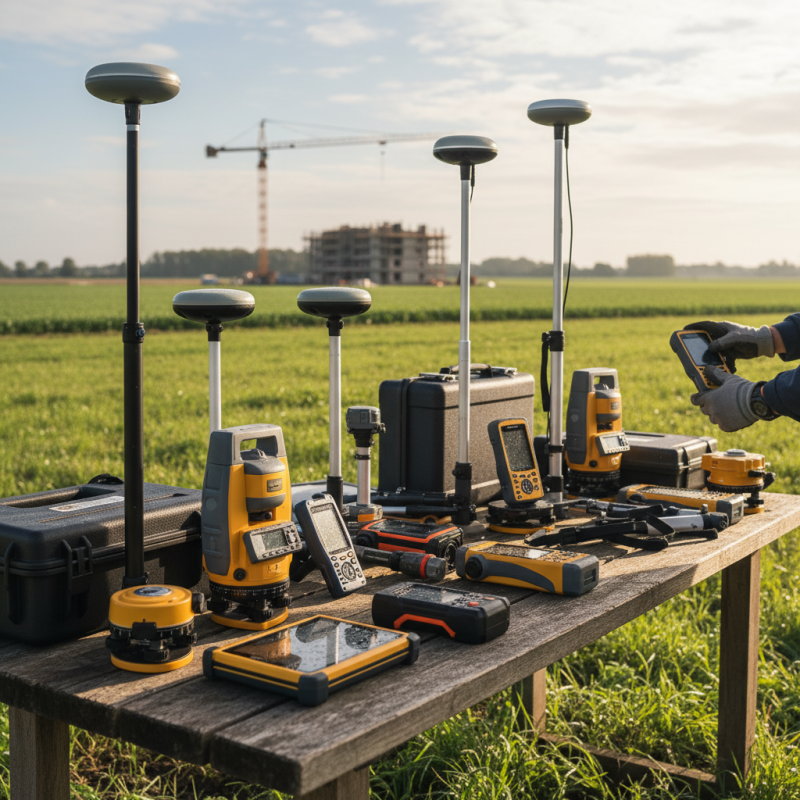
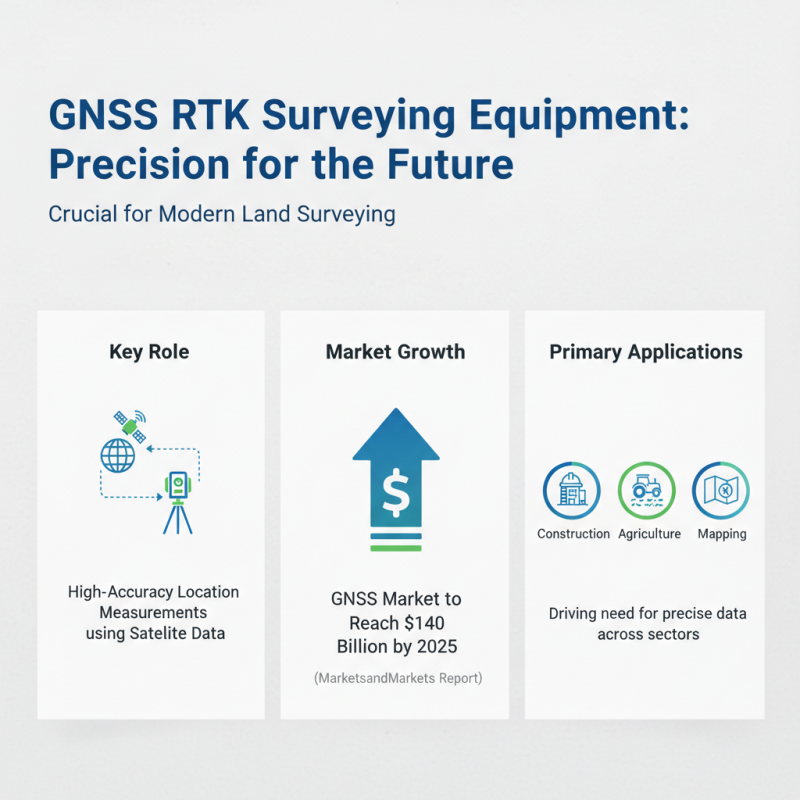
Gnss Rtk Surveying Equipment plays a crucial role in modern land surveying. These tools use satellite data to provide high-accuracy location measurements. According to a report by MarketsandMarkets, the GNSS market is expected to reach $140 billion by 2025. This growth reflects the increasing need for precise data across various sectors, including construction, agriculture, and mapping.

Various components form the backbone of GNSS RTK equipment. A receiver captures signals from satellites. It translates these signals into real-time location data. A base station is essential for improving accuracy. It sends correction data to field units, ensuring precision within centimeters. Inaccurate readings can lead to mistakes that cost time and money during projects.

Surveyors often face challenges such as signal degradation in urban areas. Interference can impact the quality of the data received. Additionally, new users may struggle with understanding how to set up and utilize the equipment correctly. Training and support remain critical for effective use. These factors emphasize the importance of robust equipment and knowledgeable personnel.

Understanding GNSS and RTK: Key Concepts Explained

GNSS stands for Global Navigation Satellite System. It provides accurate positioning data. RTK, or Real-Time Kinematic, enhances this accuracy. It utilizes satellite signals and a base station for precise measurements. Together, they revolutionize surveying, enabling centimeter-level precision.

When choosing GNSS RTK surveying equipment, consider the terrain. Different environments may affect signal quality. Urban areas often have obstructions. Check for multipath interference that can distort signals. Next, ensure the equipment is compatible with your needs. Various levels of GNSS RTK are available. Knowing these levels helps you select the right tools.

Tip: Always test your equipment before use. Small errors can lead to significant discrepancies. Another important factor is training. Understanding how to operate the system efficiently cannot be underestimated. Lastly, keep software updated. Outdated software may compromise performance.

Remember, GNSS RTK levels and surveying equipment play a critical role in achieving accurate results. Keep learning about the technology to maximize its potential. Don't overlook the fundamentals; they build a solid foundation for your projects.

Top Features to Look for in GNSS RTK Equipment

Top 10 Gnss Rtk Surveying Equipment You Need to Know?

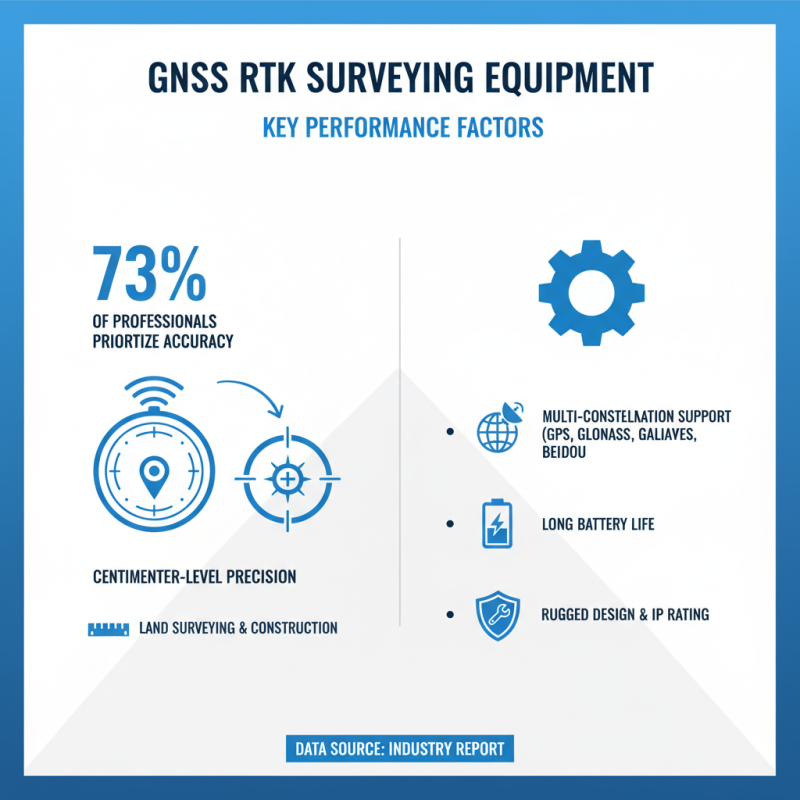
When considering GNSS RTK surveying equipment, several key features can make a significant difference in performance. Accuracy is paramount. High-end units often achieve centimeter-level precision, which is crucial for land surveying and construction projects. According to a recent industry report, 73% of professionals prioritize accuracy in their equipment selection.

Another significant feature is integration capabilities. Many modern GNSS receivers easily connect with various software and applications. This integration streamlines data collection and processing. A seamless workflow can enhance productivity by up to 40%, as noted in several user studies.

**Tip:** Evaluate user reviews on compatibility with software before making a purchase. It prevents future integration headaches.

Battery life also plays a crucial role. Depending on the intensity of your projects, look for equipment offering at least 12-14 hours of continuous operation. Extended battery life can be beneficial during long field tasks. Industry data suggests that equipment with a shorter battery life is often abandoned early in projects, reflecting its importance.

**Tip:** Always have a backup battery if your work demands extended hours outdoors. It can save you from unexpected delays.

Finally, consider portability. Compact designs can significantly ease transportation. However, some lightweight models may compromise durability. Check industry feedback regarding the balance between weight and sturdiness. It's essential to invest in a model that withstands harsh environments while remaining easy to carry.

Comparison of Leading GNSS RTK Devices in the Market

The GNSS RTK surveying equipment market is evolving rapidly. New devices are emerging, each promising improved accuracy and efficiency. Reports indicate that the global GNSS market will reach $7 billion by 2025, driven by technological advancements and rising demand. Users need robust comparisons to choose the right tool.


Weight and portability are key factors. Many modern Gnss Surveying Equipment options are lighter than previous generations. However, some units may lack durability under harsh conditions. Cost is another concern. Entry-level devices can be attractive, but long-term reliability often outweighs initial savings.


Moreover, connectivity features are essential. Advanced GNSS equipment allows real-time data sharing, yet a spotty signal can hinder productivity. Users should consider battery life too; there are devices that last all day, while others may require frequent recharging. This variance can impact workflow significantly.

How to Choose the Right GNSS RTK Equipment for Your Needs

Choosing the right GNSS RTK equipment is crucial for your surveying needs. Consider your project's scale. A large area requires more precise equipment. Smaller tasks can use less advanced options. Weight and portability also matter. If you're hiking to a site, heavy gear becomes a burden.

Here are some tips: test the equipment before purchasing. This helps you feel comfortable with the controls. Look for options with user-friendly interfaces. Complex systems may lead to mistakes during critical moments. Compatibility with software and other devices is essential. This ensures smooth data transfer.

Do not overlook battery life. Short-lasting batteries can hinder your work. Always carry spares if possible. Performance in various weather conditions is another factor. Some devices do not work well in bad weather. Research user reviews to identify these issues. With careful consideration of these details, your experience with Surveying Equipment Rtk can improve significantly.

Maintenance Tips for Maximizing GNSS RTK Equipment Life

Maintaining GNSS RTK Surveying Equipment is crucial for longevity. Regularly inspect all components, including antennas and receivers. Look for wear and tear signs. Ensure connections are secure to avoid data loss. Weather conditions can also affect performance. For instance, rain can impact signal quality. Therefore, protect your equipment from harsh elements.

Cleaning is essential, too. Use a soft cloth to remove dust and debris. Pay special attention to the connectors and lens. This simple step can enhance the accuracy of your measurements. Rechargeables should be checked frequently. A faulty battery can disrupt critical operations.

Calibration is vital. Equipment drift can lead to significant errors in surveys. Schedule regular calibration checks. It may seem tedious, but it’s necessary for reliability. Also, keep an eye on firmware updates. These updates can provide performance boosts. Sometimes, overlooking small details can lead to larger issues. It's essential to stay committed to proper maintenance. This diligence ensures your surveying equipment performs at its best.

Trends and Innovations in GNSS RTK Surveying Technology

The GNSS RTK surveying technology has seen significant innovations recently. Advanced algorithms are improving accuracy. The latest data shows that positioning accuracy can reach within 2.5 centimeters. This precision boosts confidence in various applications, from construction to agriculture. Surveyors now rely on this technology to save time and resources.

One notable trend is the integration of machine learning. Systems are becoming smarter. They analyze data more effectively to enhance real-time positioning. Research indicates that surveys using these advanced systems can be completed 30% faster. However, with this speed comes complexity. Some surveyors may find it challenging to adapt to these rapidly evolving systems.

Another exciting development is the move toward miniaturization. Compact devices are gaining traction. Their portability allows for easier integration into varied environments. Yet, potential issues arise with battery life and signal reliability. Users must consider these factors when investing in new equipment. Adapting to such technological shifts is essential for success in the field.

Top 10 GNSS RTK Surveying Equipment - Trends and Innovations

FAQS

: What is GNSS?

: GNSS stands for Global Navigation Satellite System. It provides users with accurate positioning data.

How does RTK improve GNSS?

RTK, or Real-Time Kinematic, enhances GNSS accuracy using satellite signals and a base station for precise measurements.

What should I consider when choosing GNSS RTK equipment?

Consider the terrain and potential signal obstructions. Urban areas may have multipath interference affecting quality.

Why is equipment testing important?

It's vital to test your equipment before use. Small errors can lead to significant discrepancies in measurements.

What maintenance should be performed on GNSS RTK equipment?

Regularly inspect components, clean with a soft cloth, and check battery health to enhance accuracy and reliability.

How often should calibration occur?

Schedule regular calibration checks to avoid errors. It may seem tedious but is crucial for accurate survey results.

Why is software updates necessary for GNSS equipment?

Outdated software can compromise performance. Keeping software updated ensures optimal functionality.

What factors affect the portability of GNSS devices?

Weight and durability play key roles. Lighter devices may lack robustness under harsh conditions, impacting usability.

How does battery life impact the workflow?

Some devices last all day; others need frequent recharging. This variance can significantly affect overall productivity.

What are the signs of equipment wear and tear?

Look for physical damage and ensure connections are secure. Over time, wear can affect performance and data quality.

Conclusion

The article "Top 10 GNSS RTK Surveying Equipment You Need to Know" provides a comprehensive overview of the essential tools and technologies essential for precise surveying. It begins by explaining the fundamental concepts of GNSS (Global Navigation Satellite System) and RTK (Real-Time Kinematic) surveying, which are vital for achieving high accuracy in data collection. Readers will learn about the key features to look for when selecting GNSS RTK surveying equipment, such as accuracy, ease of use, and durability.

Furthermore, the article compares the leading GNSS RTK devices currently available in the market, helping users understand their options. It also offers guidance on how to choose the right equipment based on specific needs, ensuring optimal performance for surveying tasks. Maintenance tips are provided to maximize the lifespan of GNSS RTK surveying equipment, alongside insights into emerging trends and innovations in the field that can enhance surveying practices. This article serves as a valuable resource for professionals seeking to stay informed about the latest advancements in GNSS RTK technologies.

Samantha

Samantha

Samantha is a dedicated marketing professional at Shanghai Apekstool (APEKS), a leading provider of innovative geospatial surveying and mapping products based in Shanghai, China. With a deep understanding of the industry, she excels in promoting the company's core offerings, which include......
Previous Top 10 RTK Col Antenna Manufacturers from China at the 137th Canton Fair